








In interdependence - which is one of the founding values of the B Corp movement - there is no social sustainability without environmental sustainability, there is no progress without respect for ecosystems and human rights. Without human ecology, there is simply no future.

- Davide Bollati, Davines Chairman

gem pages image

PACKAGING ECODESIGN

Reduce, reuse, recycle, regenerate

Sustainable solutions

To minimize our impact

Packaging plays a key role in protecting our formulas while ensuring a safe and pleasant experience while in use.


Every time we design a product, our main objective is therefore to minimize as much as possible its impact on the environment. For this reason, our research and development laboratory constantly works on innovative solutions that are increasingly sustainable: 

- we are progressively replacing all virgin plastic with recycled plastic or bio-based plastic; 

- we have reduced the weight of our glass vases

- we are introducing refillable solutions.

We are conscious that packaging has an impact and no material can be considered as perfect.

gem pages image
gem pages image

our eco-design principles

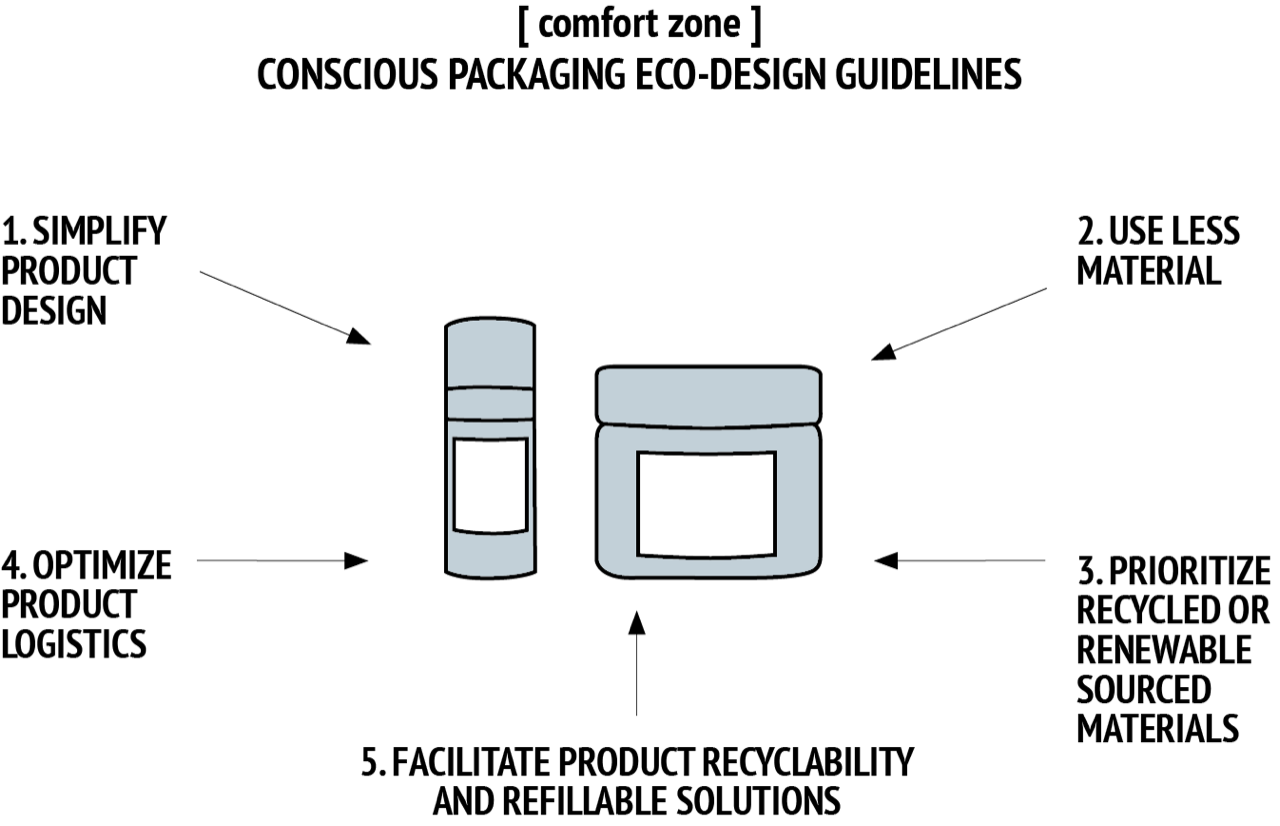
One side we have the quality of the plastic we choose, on the other the quantity we use. [ comfort zone ] strives to design lighter packaging, still guaranteeing its safety and functionality: more lightweight packaging means a minor quantity of material used, thus fewer resources consumed. 


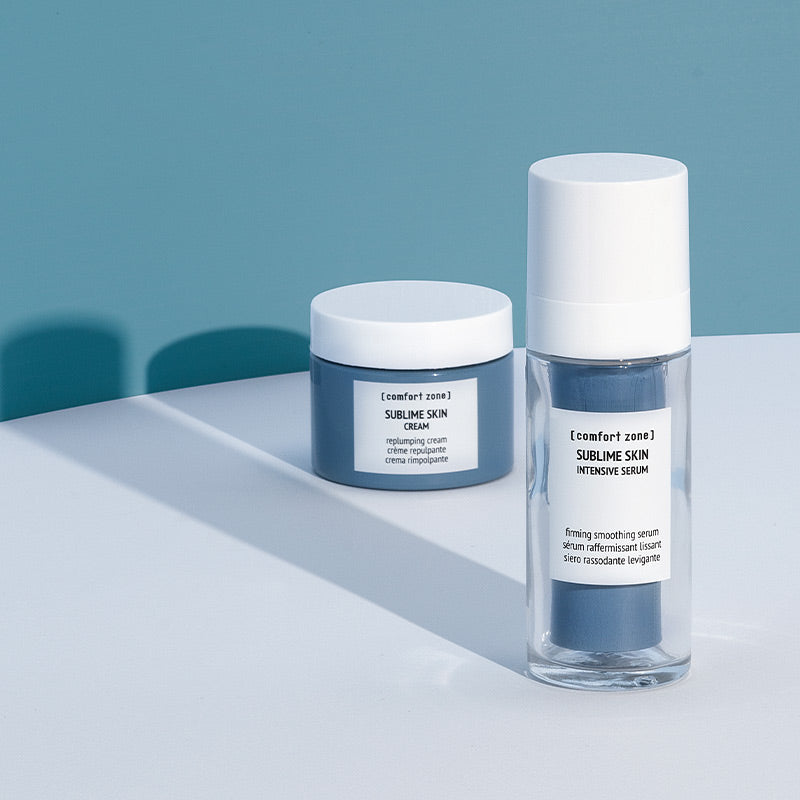
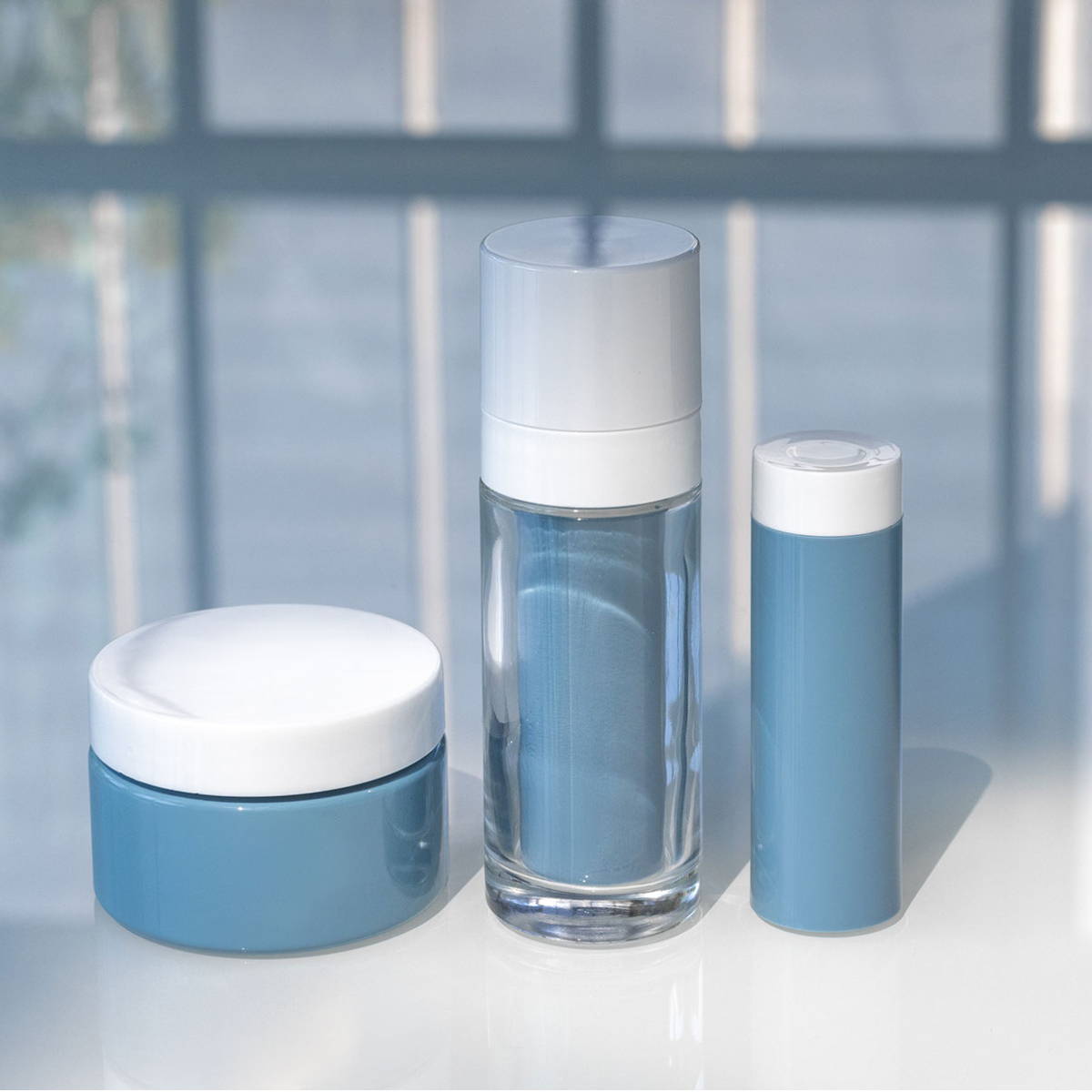
We also aim for simplification, reducing the packaging components as much as possible, eliminating unnecessary plastic elements and introducing refillable solutions, as we have done for our new Sublime Skin Intensive Serum.

PLASTIC NEUTRAL CERTIFICATION 

BY PLASTIC BANK


Although we recommend to consciously recycle all packaging components, we are aware that some waste still happens and affects vulnerable, coastal communities.

For this reason, since 2022, we have partnered with Plastic Bank to ensure that for every product with a plastic packaging we sell, the same amount of plastic is collected from the coasts of Brazil, Indonesia, and the Philippines.

This project has also a very important positive social impact, since it improves the lives of local collectors, ensuring bonuses to support their families needs.


gem pages image

Why are we STILL using plastic? 

For liquid formulas like cleansers, shower gels and masks, plastic packaging allows for the lightest design, a substantial reduction in raw material used, weight and therefore lower CO2eq emissions.

Plastic allows us to minimize CO2eq emissions, compared to most of other packaging materials.

Our Plastic Footprint

We are aware that the use of plastic ecompasses a variety of challenges linked to its possible dispersion into the environment. As Davines Group, we have chosen to accelerate our efforts on this issue and in 2020 - for the first time - we calculated* our plastic footprint.  


In few words, we calculated that the amount of plastic waste we generate through our business has been 721,9 tons in 2020.

* Calculated according to the “Guidelines for Corporate Plastic Stewardship” published in February 2021 by 3R Initiative, EA, South Pole and Quantis. According to the methodology, the calculation considers the following plastic categories: upstream-operational, operational, operational-downstream.

gem pages image
gem pages image

What is plastic leakage?

Once aware of the plastic footprint, we have researched if the plastic waste generated by our business was correctly managed and recovered. And – if in any specific situation or country - it was not, and may end up dispersed in the environment: this is what can be defined as plastic leakage.


According to our calculations* only 14 tons of plastic waste - 1.9% of our plastic footprint - are improperly managed and could end up in the environment.

* Calculated following the methodology proposed by “Plastic Leak Project - Methodological guidelines” published in 2020 by Quantis and EA (and mentioned in the document of point 1 above) and considers only macro-plastics.

gem pages image

The type of plastic we use: a circular approach

When improving our packaging environmental impact, working on properly managing our products’ end-of-life is meaningful. What is truly crucial is eco-designing the packaging from the beginning of the life cycle itself. 


Therefore, since 2015 - when we were using only fossil virgin plastic - we strongly moved to recycled or renewable sourced plastic materials.

When choosing plastic, we prioritize recycled or bio-based plastic. 

59% 

recycled or bio-based plastic packaging 

631 tons

of plastic saved since 2014 thanks to eco-design

Plastic Glossary

All the things you've always wanted to know about plastic, and never dared to ask.

BIO-BASED PLASTIC

This is a plastic that derives from renewable sources, such as sugar cane, corn starch, cellulose, glucose and vegetable oil. There are different types of bio-based plastic: recyclable or biodegradable. Important: Bio-based doesn’t mean biodegradable. Davines group is using bio-based plastic coming from

renewable sources like sugar cane, foodgrade and recyclable. The bio-based plastic we select is Bonsucro certified, which ensures the origin of the material

from responsibly managed sources.

PE PLASTIC (POLYETHYLENE/ HDPE LDPE)

It has high mechanical resistance, good rigidity and barrier to humidity and chemicals. Recyclable. Not currently available in food grade certified recycled version.

PET PLASTIC (POLYETHYLENE TEREPHTHALATE)

It is shock resistant and has good mechanical properties and impermeability to gases. It is used for the production of bottles and pots. It is one of the most easily selectable and recyclable plastics. The R PET recycled material maintains characteristics very similar to the virgin polymer. Aesthetically less homogeneous than the virgin material.

PP PLASTIC (POLYPROPYLENE)

It has a good thermal resistance and high rigidity, it acts as a barrier to water vapour but not to gases. It is used for the production of pots, caps/lids. Recyclable. Not currently available in food grade certified recycled version.

RECYCLED PLASTIC

Plastic generated from processed waste to be reintroduced into the value chain. Davines Group is using only 100% postconsumption recycled plastic (not from industrial waste). The advantage of using recycled plastic lies in the possibility of reducing the use of non-renewable resources, in a circular economy perspective. By recycling plastic, we maximize the value of this material, even at the end of its life cycle, and minimize its environmental impact by becoming waste. 

Souscrivez à notre Newsletter en anglais